Showing posts with label china travel. Show all posts

Saturday, September 29, 2018

The Temple of Heaven 天坛 and the Yonghe Temple 雍和宫

           Have you ever heard these Chinese cultural terms: 天命 (the mandate of heaven), 平天下 (tranquility of all under heaven), or 天子 (son of heaven)? They are terms that date back all the way to the Zhou dynasty. You might notice they all have the character 天, meaning sky, day, or, in ancient times, heaven (heaven in the western sense is called 天堂). All of these words derive from Chinese heaven worship. Here I will explain the concepts of these three terms as pertains to their importance in traditional Chinese culture, especially in statecraft.
           The term 天命 or, mandate of heaven, refers to the doling out of justice upon leadership by heaven. This mandate is what caused the ruling dynasty to end, and for the future dynasties to begin. It would usually manifest itself as a natural disaster such as a flood, earthquake, or famine. Such disasters would be interpreted by the people as a sign that the emperor has lost the mandate, and begin to revolt.
             Of course, the system wasn't so simple that a large scale revolt would begin at the first sign of a little rain. Unfortunately, because the government was filled with bureaucracy, it was very easy for leaders to become corrupt, and it was in the people's plight from corruption that they would start to notice these natural signs and begin the revolt.
             Since the emperor was said to have the mandate of heaven, it follows that he should be considered by heaven as more important than everyone else. He was given the name 天子, or son of heaven. In Confucianism, being a son to someone, you need to respect them with 孝(filial piety), meaning that the emperors in Beijing needed to go to the temple of heaven to pray to their ancestors, which the emperors of the Ming and Qing dynasty would do annually (I am sure other emperors probably did this, they just didn't do it in Beijing).
                   Recently, I have been reading an ancient Chinese book called "The Great Learning" or 大学in Chinese. It is thought of as a primer for anyone wanting to study Confucianism. It goes over eleven terms that are considered important for the study called the 三纲八目, which I haven't been able to properly translate, so I will call them the three cardinal guides and the eight goals. Once of them is called 平天下, which means tranquility of all under heaven, but really means a tranquil empire (because China was considered the center of the world). In "The Great Learning," it basically says that the emperor should behave well, because everything he does should and will act as a trickle down to the lower groups of society (the state, the family, etc.). He should lead by example for all of his subjects.

The Temple of Heaven 天坛
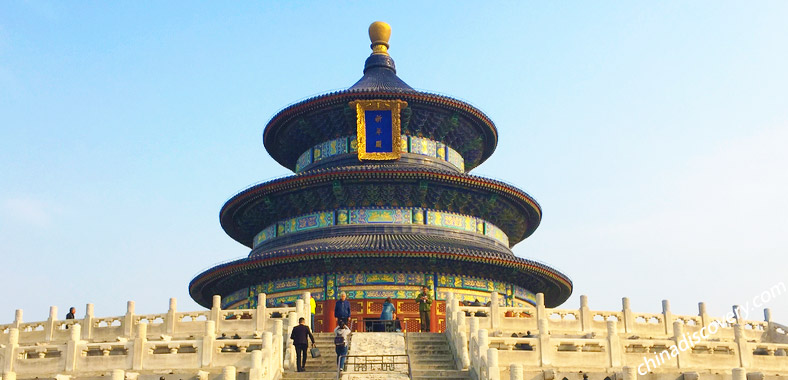
                  The Temple of Heaven was an important building in Beijing, because this is where the emperors would go each year to pray for a good harvest, and a tranquil empire. In other words, he was praying to keep the mandate of heaven so his family could continue to rule China. This building has a very interesting and complex design. I am really simplifying the explanation a lot, but you can see that the main temple is round, and inside the temple is square. The round part symbolizes heaven, and the square symbolizes the earth.
                 Unfortunately, the beautiful Temple of Heaven also suffered at the hands of the French and the British at the end of the Second Opium War. I want to cry some more! That's alright though, because it was rebuilt, and it now a UNESCO World Heritage Site. You can see it for yourself in all it's glory.


The Yonghe Temple 雍和宫
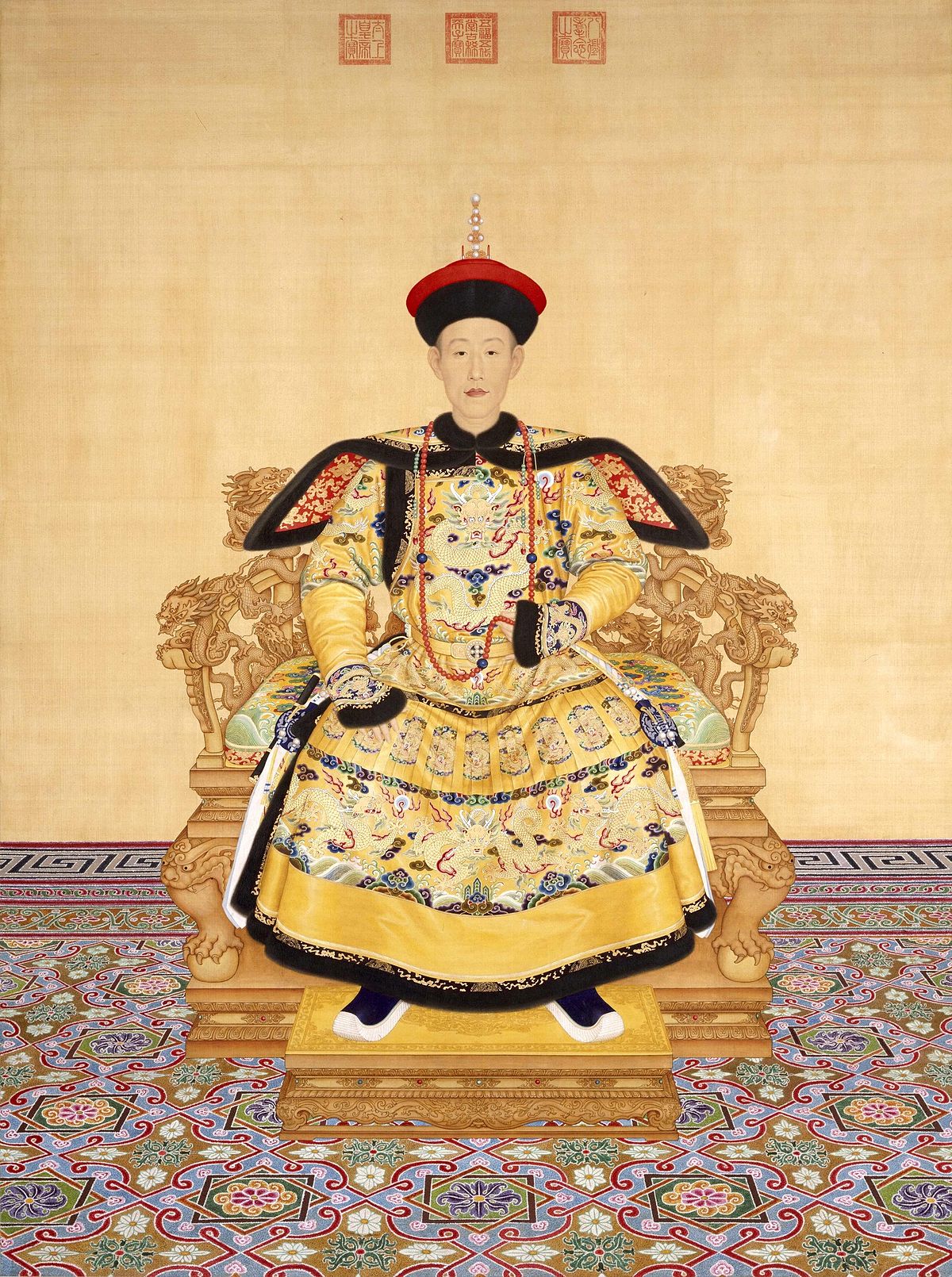
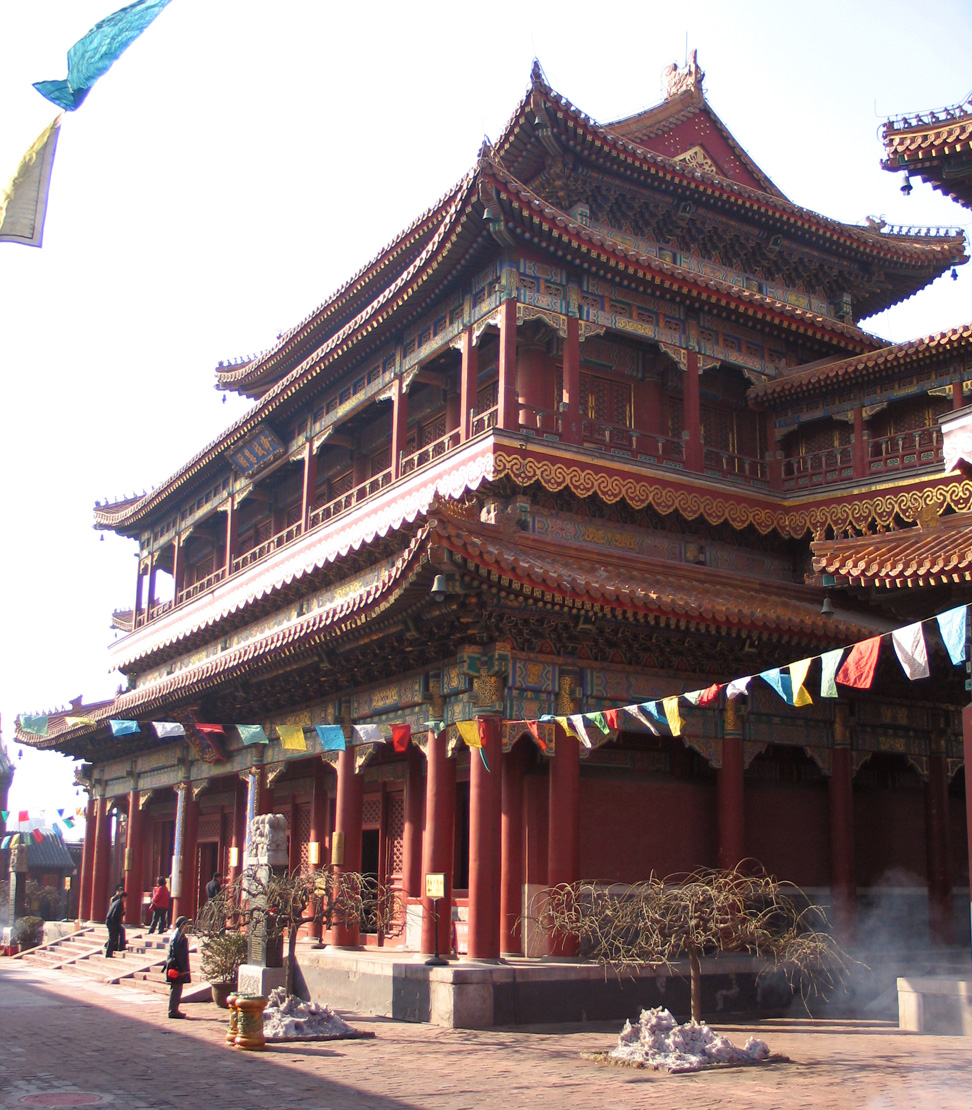
                The Yonghe Temple, also called the Palace of Peace and Harmony, was built during the Qing dynasty. During the reign of the Kangxi emperor it was a home for his son, and future emperor Yongzheng. When Yongzheng ascended the throne it was converted to a lamasery for Tibetan Buddhist monks from Mongolia and Tibet, and it became the Chinese national center for lama administration. Yongzheng was later buried their at the place that was his childhood home. One notable work of art from the temple is a statue of the Maitreya Buddha that was given as a gift to the emperor Qianlong (son of Yongzheng) as a gift by the seventh Dali Lama. It is famous, because it took three years for the statue to reach the temple. It reminds me of a similar but much more impressive story from the history of the Hexi Corridor, which I will leave for my series of blogs on that topic. Anyway, I will be sure to get a picture of the statue if I am allowed.

          That will be the end of this blog. I haven't seen any videos related to these two places in particular. If you are interested to learn more about Confucianism, you can read the ancient Confucian books, "The Great Learning", "The Analects of Confucius," "The Works of Mencius," and "The Doctrine of the Mean," along with me. 


In the next blog I will be focusing back on Xi'an to discuss another very popular figure in Chinese history, Wu Zetian 武则天 also known in English as Empress Wu of the Tang dynasty along with the big and small Wild Goose Pagodas and the Daming Palace.

Friday, September 28, 2018

Yang Guifei 杨贵妃 and Huaqing Palace 华清宫

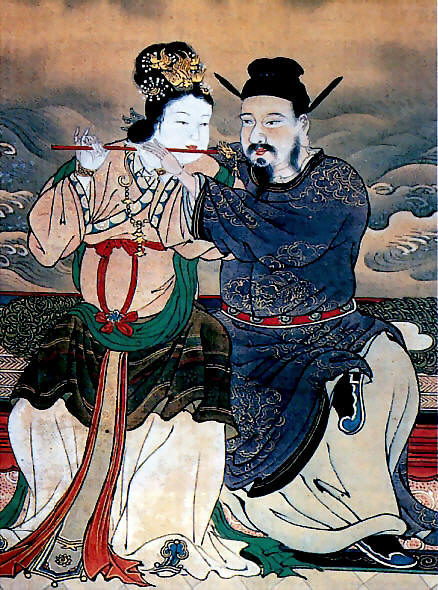
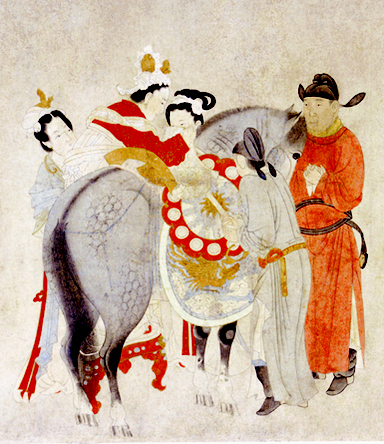
          In Chinese history there are four women said to be famous for their beauty. They are known in Chinese as 四大美女(sì dà měi nǚ), four beauties. One of these beauties, Yang Guifei, lived during the Tang dynasty. She was said to be full in figure, as was the beauty standard during this period, and so beautiful that every time she walked near a flower, they would turn away in shame. In Chinese, they say 贵妃羞花 (guì fēi xiū huā) or, Yang Guifei puts the flower to shame.

           Yang Guifei was originally the wife of emperor Xuanzong's son, prince Shou, during the Tang dynasty. Emperor Xuanzong took notice of her after his favorite wife died, so he began to think of how he could have her for his own without compromising his honor. In the end, she ended up becoming a nun for a while before finally becoming the emperor's wife, receiving the highest ranking title of guifei. She and her family enjoyed the highest favor of the emperor, and he spent all his time with her. He didn't even seem to notice any of his other wives. She famously loved eating lychees, but this fruit didn't grow in the north. The emperor sent horses across the country to make sure she always had some lychees to eat.


        Yang Guifei eventually became friends with a man named An Lushan (maybe more than friends, but we don't know that for sure). It was even said that emperor Xuanzong gave him to her as a son. She convinced the emperor to make An Lushan a commander of a huge area of land, giving him nearly two hundred thousand troops in his control. This would prove to be a grave mistake.
        An Lushan ended up using the troops that Yang Guifei convinced the emperor to give him to rebel, attacking Chang'an and forming his own dynasty, called the Yan dynasty. Eventually the Yan dynasty was defeated and the Tang dynasty was rebuilt. On the way to a safe haven in the western region, emperor Xuanzong had to make the difficult decision to have most of the Yang family killed and Yang Guifei strangled. Such was the end of the last of the four great beauties of China. She was beautiful enough to not only distract the emperor, but also to cause a successful rebellion against the Tang dynasty.

The Huaqing Palace 华清宫 (huá qīng gōng)
               Huaqing pool was the emperor's personal hot spring bath. The only people who were allowed to bathe there were Xuanzong himself and Yang Guifei. It is said she bathed there often to give her perfect skin. The palace structure dates back to the Zhou dynasty, before China was a unified country, but it was given the name Huaqing Palace during the Tang dynasty. It was partially destroyed during the An Lushan rebellion, but there is still much to see. I am looking forward to seeing the famous white statue of Yang Guifei. I will be sure to take a lot of photos there.
                If you would like to know more about Yang Guifei, there are many television shows, plays, and movies about her, including one with Fan Bingbing. I will eventually have a look at a few of them, and I'll recommend if I enjoy them. For the next post I'll probably talk about another one or few of the many many places I will be visiting in Beijing. I might not have time to cover the big ones like Tiananmen, The Palace Museum, or the Great Wall before I leave on Sunday, because there is just so much to talk about. I will get to everything eventually!

Thursday, September 27, 2018

The Terracotta Army 兵马俑(bīng mǎ yǒng) and The First Emperor of China 秦始皇帝 (qín shǐ huáng dì)

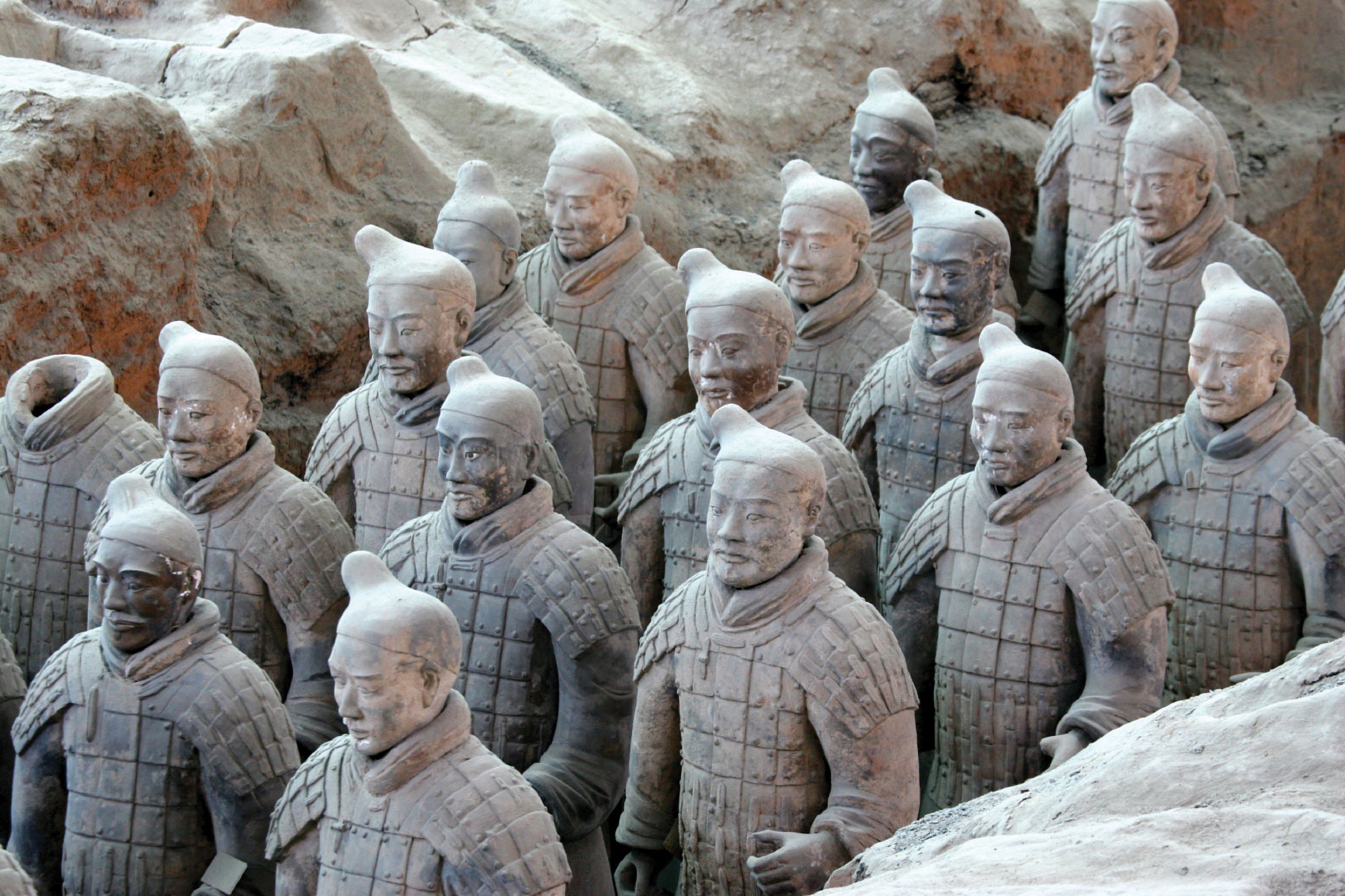
           Welcome to Xi'an, the ancient capital of China. Formerly known as Chang'an, Xi'an was the capital for (I want to say) the majority of China's dynastic period. It was the home of the previously mentioned Emperor Wu of Han and Zhang Qian. It was the beginning (or end depending on your perspective) of the famed Silk Road. It was also home to probably China's most famous ruler, the first emperor, Qin Shi Huang (秦始皇帝qín shǐ huáng dì). Qin Shi Huang was the first (but not the last) ruler to unify China during the Warring States Period (战国zhàn guó). He founded the Qin dynasty(秦朝qín cháo), adopted legalism (法家fǎ jiā) as his government style, began the construction of the Great Wall of China, and built a huge, complex, and mysterious tomb guarded by his terracotta army.

           Along with Confucianism, the early years of China's dynastic period's statecraft was shaped by a concept called Legalism. It is responsible in part for the bureaucracy that characterizes the dynastic government of China. I remember in one reading I was assigned in school, a man dies, and he begins his trip through the afterlife by filling out the appropriate paperwork, fighting his way from department to department to his final rest. Even the afterlife is filled with bureaucracy! (I really wish I remembered the name of this. Next time I go back to the states I'm going to grab my old textbook and bring it home with me.) I also remember that Legalism was quite cruel by western standards, and that I explained it to my friends with a story example. There are two ministers, the minister of capes and the minister of caps. When the emperor falls asleep, a cold wind blows, and the minister of caps puts a cape on the emperor. When he wakes up, the emperor asks who put the cape on him, and the minister of caps answers. Therefore, because the minister of capes hasn't done his job and the minister of caps overstepped his boundaries, they are both put to death. So, this is the kind of environment that has been set up by Qin Shi Huang.
           Most of the Great Wall we can see today was constructed during the Ming dynasty, but the original construction was begun by Qin Shi Huang. A large part of China's land was famously difficult to maneuver through giving the empire a natural barrier. However, part of the northwestern region was open to attack from the Xiongnu barbarians, so the construction of the great wall began.
             We can't see much of the Great Wall constructed during Qin Shi Huang's reign today, but the stories of it's construction continue to haunt. Thousands of men were sent to work on the wall, many of whom never came back. It is said that, when someone died, they would simply build him into the wall. This is not widely accepted by the historic community to be true, but these kinds of stories set the tone. There is a famous story of a woman named Mengjiang Nv who waited and waited for word from her husband, who had been sent to work on the wall. She decided she couldn't wait any longer, and traveled to the wall herself. When she arrived, she discovered that her husband had already died. Because her husband was the only person she had in the whole world to take care of her, she was stricken with deep grief. People say that her crying caused a part of the wall to fall down.
           The other impressive thing that Qin Shi Huang did during his reign was to create a massive and mysterious tomb guarded by his famous terracotta army. Based on all the things he had done during his reign, it is no surprise that Qin Shi Huang wasn't a very popular ruler. There is ample evidence that he was well aware. As is with many other famous Chinese rulers who stabbed their fare share of backs to get what they wanted, later in life he began to fear the ghosts of his enemies (it is often stated that famous Chinese historical figures see the ghosts of people they have killed when they are about to die. It happens a lot in Romance of the Three Kingdoms as well as many other Chinese stories). To protect himself from his enemies in death, Qin Shi Huang built a tomb that was filled with rivers of deadly mercury said to emulate the rivers of his empire. He also had a massive army based on his army in life to follow and protect him in death. 
                 
                           I personally have had many opportunities to see the terracotta warriors exhibit. I saw it once at the Indianapolis Children's Museum and a few years later I saw it at the Field Museum in Chicago the first time my husband went to America, but this will be my first time to see the terracotta army in China. I am really looking forward to sharing my experience with all of you!


               There is an excellent documentary about Qin Shi Huang called "The First Emperor of China." I highly recommend having a look. It was introduced to me years ago by my Chinese teacher back in the States. I'll leave a link here.
              That's all for now. In the next blog I will be talking about one of the famed "four most beautiful women in China."